Why We Need to Embrace a Multi-Speed Europe
Opinion article by Reinier van Lanschot, Volt MEP. The EU is like a car with square wheels. It only starts moving when a lot of pressure builds, and when it does, it's sudden, bumpy, and hard to predict how long the wheels will turn.
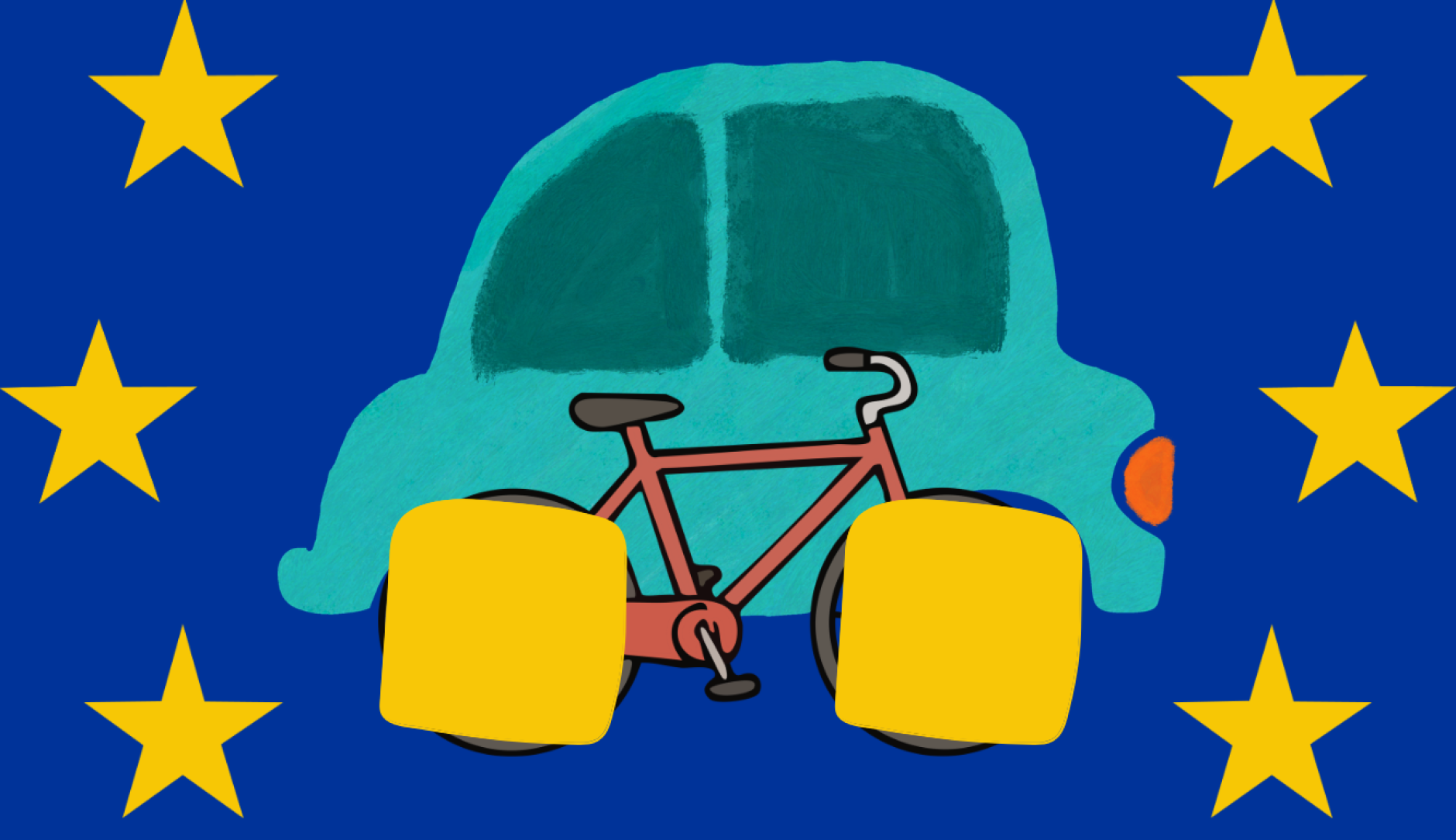
In this car, 27 national leaders are behind the steering wheel. If 26 of them press down the gas pedal to accelerate, but one pushes the brake, the car doesn't move. Every single country has a veto which blocks our progress. This is increasingly problematic, because there are areas where we urgently need progress: defence, enlargement, and competitiveness.
Volt wants to create the United States of Europe (USE), a democratic federation, which will enable a society where people have dignified lives with the highest standards of living on the planet. Recently, due to geopolitical pressures from Russia, the US and China, big generational societal challenges like the climate crisis and decreasing economic performance, many Europeans have started to recognise the need for real change.
The EU is currently not able to change due to vetoes from unambitious national politicians who are chained to national interests and prevent desperately needed change. As a result of this deadlock, calls for ''multi speed Europe'' or ''pragmatic federalism'' have become louder. In this vision, coalitions of the willing made up of countries wanting to move faster and integrate deeper go ahead before the others (who then catch up later).
This practice is not new. The Euro and Schengen are examples of massively successful projects that were kickstarted by a few ambitious countries and became the norm for almost everyone only later. The European Public Prosecutor Office is an ongoing example.
These forms of multi speed Europe can take place through different legal pathways such as enhanced cooperation under EU law or intergovernmental treaties outside the EU. Some of them allow non-EU countries to participate, such as Ukraine, the UK or Norway.
This would also help address the other challenge: enlargement. If we want to make sure that well-performing countries join the EU faster, but also prevent a new Viktor Orbán from entering the Union, we have to embrace a 'more for more, less for less' approach.
In ideal circumstances, the EU would move as one to become the USE, a place where everyone joins the next steps in our cooperation right away. But in today's world, we don't have time to wait for the least ambitious national politician in the room.
We can get to the United States of Europe at different speeds. What emerges is a kind of European 'onion': an inner core should be able to move towards the USE at greater speed, the current EU should apply its fundamental values much stricter, candidate countries should get a fairer 'more for more, less for less' approach and an outer layer of friends like the UK, Norway and Canada should be kept close.
Volt supports forms of voluntary multi-speed Europe, as long as they are:
Last resorts to move ahead with common and ambitious EU reform, which is blocked by lack of unanimity;
Explicitly designed to be open to other EU (and non-EU) countries and over time can become an EU-wide reform;
Binding once countries sign up, no easy 'opt-in, opt-out' mechanism;
Utilising EU frameworks within EU law, not ad-hoc intergovernmental solution;
Combined with strong rule of law and democracy safeguards and automatic reversals that prevent backsliding countries from abusing the system
Never politically abused to create ‘first and second class’ member-states, or a perception thereof, only to accelerate deeper integration
In other words: a clear 'step-by-step' system that is equally open to all countries, merit-based, and guided by the same legal framework, contributing to a faster, 'ever closer Union’. Countries can move up and down the ladder based on independent and objective criteria, not arbitrary political distinctions. For candidate countries, such stages help accelerate membership; they will never be an alternative to full membership.*
Layer 1: The Federal Core: towards a ''United States of Europe''
Criteria: enhanced cooperation enacted within EU law (e.g. article 20 or 46) as long as they fulfil the four conditions outlined above
Effect: more federal competences for the EU on critical policy areas (e.g. a capital markets, savings and investment, fiscal, foreign and defence Union)
Layer 2: The European Union (status quo)
Criteria: formal EU membership with full voting rights has been acquired
Effect: current EU: full coverage of EU law, policies, budget, voting rights
Layer 3: Advanced candidate countries
Criteria: full alignment with the EU's common foreign and security policy (CSFP), positive Interim Benchmark Assessment Report (IBAR) received for the opened fundamentals cluster (meaning: a high level of rule of law and democracy)
Effect: early access to select parts of the EU budget, application of the mutual defence clause article 42.7, and full participation (with voting rights but without a veto) in EU institutions for closed chapters (meaning: for policy areas where reforms are finished)
Layer 4: Regular candidate countries (status quo)
Criteria: Any European** State which respects the EU's fundamental values and is committed to promoting them (article 49), candidate status received
Effect: gradual access to EU single market and policies based on reform and growth plans, as well as simple observer status in all EU institutions (w.o. voting rights)
Layer 5: Value-based partners (EFTA +)
Criteria: Any democratic country that has signed a partnership with the EU
Effect: privileged but conditional participation in specific EU single market or policy areas, like defence, technology, energy. Economic ''anti-coercion'' pact. ''Super Brussels effect'' on global regulatory standard setting.
Written by Reinier van Lanschot, Volt MEP
*For our detailed position on EU enlargement/reform, the various stages of 'more for more, less for less' and its criteria and effects, please check out our vision paper.
**Volt considers any country in which a majority of the population has democratically expressed an aspiration for EU membership to be a European state.
______________
You and us share the same dream of a united, thriving Europe. It really means a lot to us when you make a donation, and if you would like to help us plan ahead with confidence, we thank you for your monthly contribution 💜