Hungary’s election is a turning point that should mark the start of change also for the EU
Yesterday’s election in Hungary has been widely described as historic. And it is. After 16 years in power, Viktor Orbán, the emblem of Europe’s “illiberal democracy”, has been defeated. For many, this marks a long-awaited democratic breakthrough. It was a good day for democracy and the rule of law.
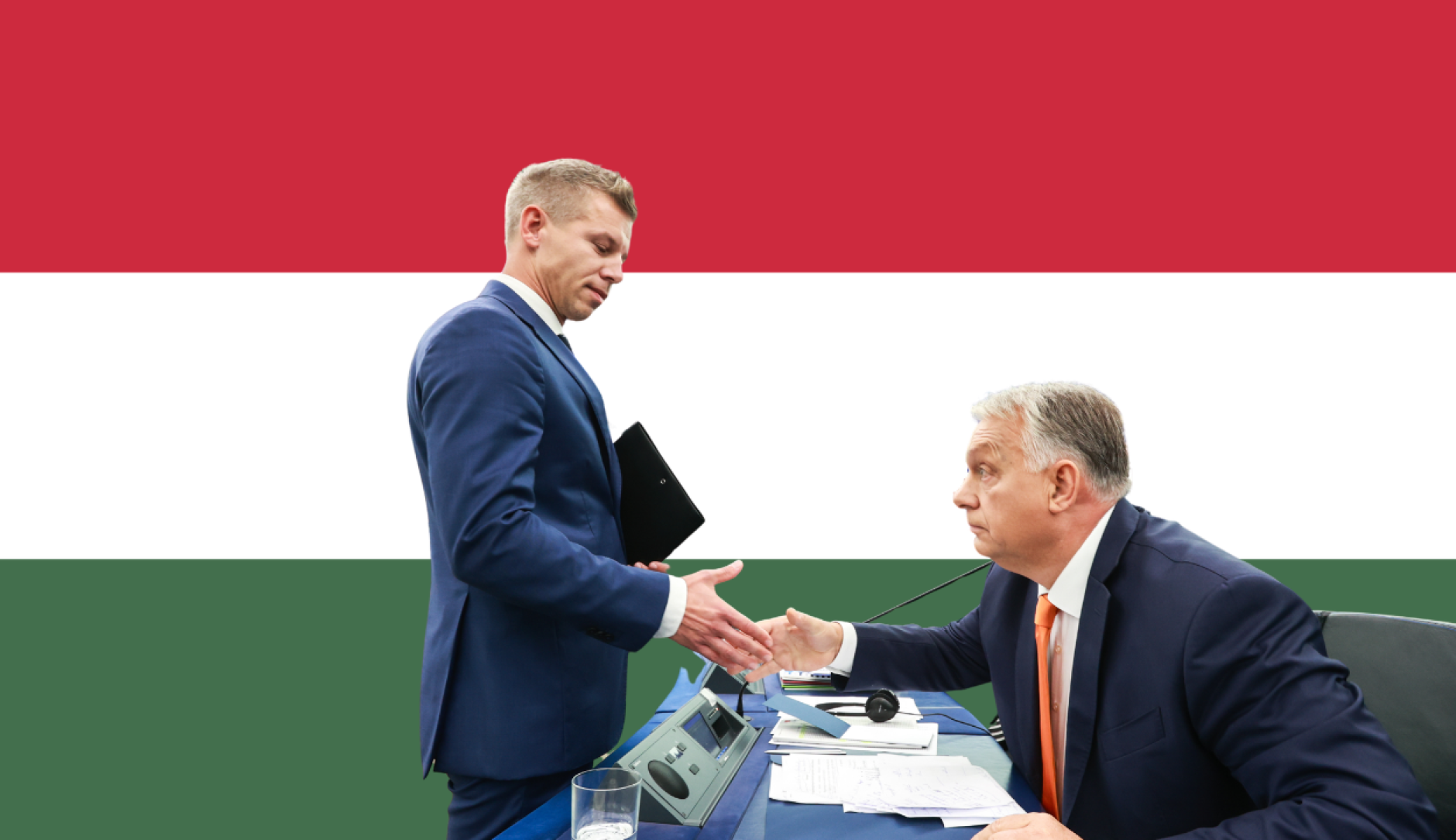
But if we stop at celebration, we miss the deeper story.
Hungary’s recent history has exposed the structural contradictions of today’s European Union.
For over a decade, Orbán was not an outsider. His party, Fidesz, sat comfortably within the European People’s Party, the main centre-right political family in Europe and the same grouping Ursula von der Leyen sits in. During those years, the erosion of democratic norms in Hungary was visible and yet largely tolerated.
This is not a Hungarian anomaly. It is a European failure.
The rise of illiberal leaders across the continent did not happen in a vacuum. It followed a decade marked by overlapping crises: the financial crash of 2008, the Eurozone crisis of 2012, the migration crisis of 2015, the pandemic, and now the chaos that geopolitical and energy crises have brought to us.
Too often, the EU’s response to these crises has been perceived as technocratic, punitive, and detached. Austerity policies, imposed without sufficient democratic ownership, have fed a sense of alienation. When decisions that deeply affect people’s lives appear to be taken by distant, unelected actors, political backlash is not a surprise, it is a consequence.
Orbán’s system was built on that backlash. But it went further.
Over the years, Hungary developed a political model that combined electoral competition with structural imbalance: media capture, institutional pressure, and electoral reforms designed to favour the ruling party. This is why yesterday’s result is widely seen as remarkable. Winning against such a system is not just a political victory. It is a structural disruption.
And yet, this is not the end of the story.
Hungary’s new Prime Minister, Péter Magyar, represents a break with Orbán’s leadership. This is good: Hungarians deserve honesty and rebuilding institutions that were systematically dismantled over sixteen years takes time. So does restoring judicial independence, rebuilding a free media landscape, reforming public education, unwinding the networks of political patronage that run deep through the economy. None of this happens in one parliamentary term, and none of it happens without resistance. That is the reality of rebuilding a state that was deliberately hollowed out. At the same time Magyar does not represent necessarily a break with the broader ideological landscape of European centre-right politics. It is clear, for example, that on issues such as migration, continuity rather than rupture is defined in the coming years.
This matters because the real question is not just who governs Hungary, but what kind of Europe emerges from this moment.
Orbán’s defeat weakens a key obstacle to a more coherent European foreign policy, particularly on Ukraine and relations with Russia. But the deeper challenge remains: Europe still lacks the political capacity to act as a unified power.
Without a common foreign policy, a shared defence framework, and genuine democratic legitimacy across borders, the European Union will continue to react rather than lead.
Hungary’s election is therefore both a success and a warning.
A success, because democratic change is still possible; a warning, because the conditions that enabled Orbán’s rise have not disappeared.
If Europe wants to prevent the next Orbán, it must go beyond managing crises. It must address their root causes: inequality, democratic distance, and the absence of a truly European political space.
Otherwise, this victory will remain an exception rather than the beginning of a new European trajectory.
By Francesca Romana D'Antuono and Mels Klabbers, Co-Presidents of Volt
Image source: https://upload.wikimedia.org/wikipedia/commons/5/50/Peter_Magyar.Viktor_Orban.jpg

______________
You and us share the same dream of a united, thriving Europe. It really means a lot to us when you make a donation, and if you would like to help us plan ahead with confidence, we thank you for your monthly contribution 💜