SOTEU: Geopolitical or regulatory power? National governments decide, Europe pays the price.
The SOTEU will not feature a deeper integrated and geopolitically relevant Europe as answer to nationalism – The Commission not being political in Iceland and considering skipping Mark Carney’s speech shows the lack of European political leadership and opportunism – Member states shooting down a “Draghi plan for Defence” shows national parties are holding Europe back.
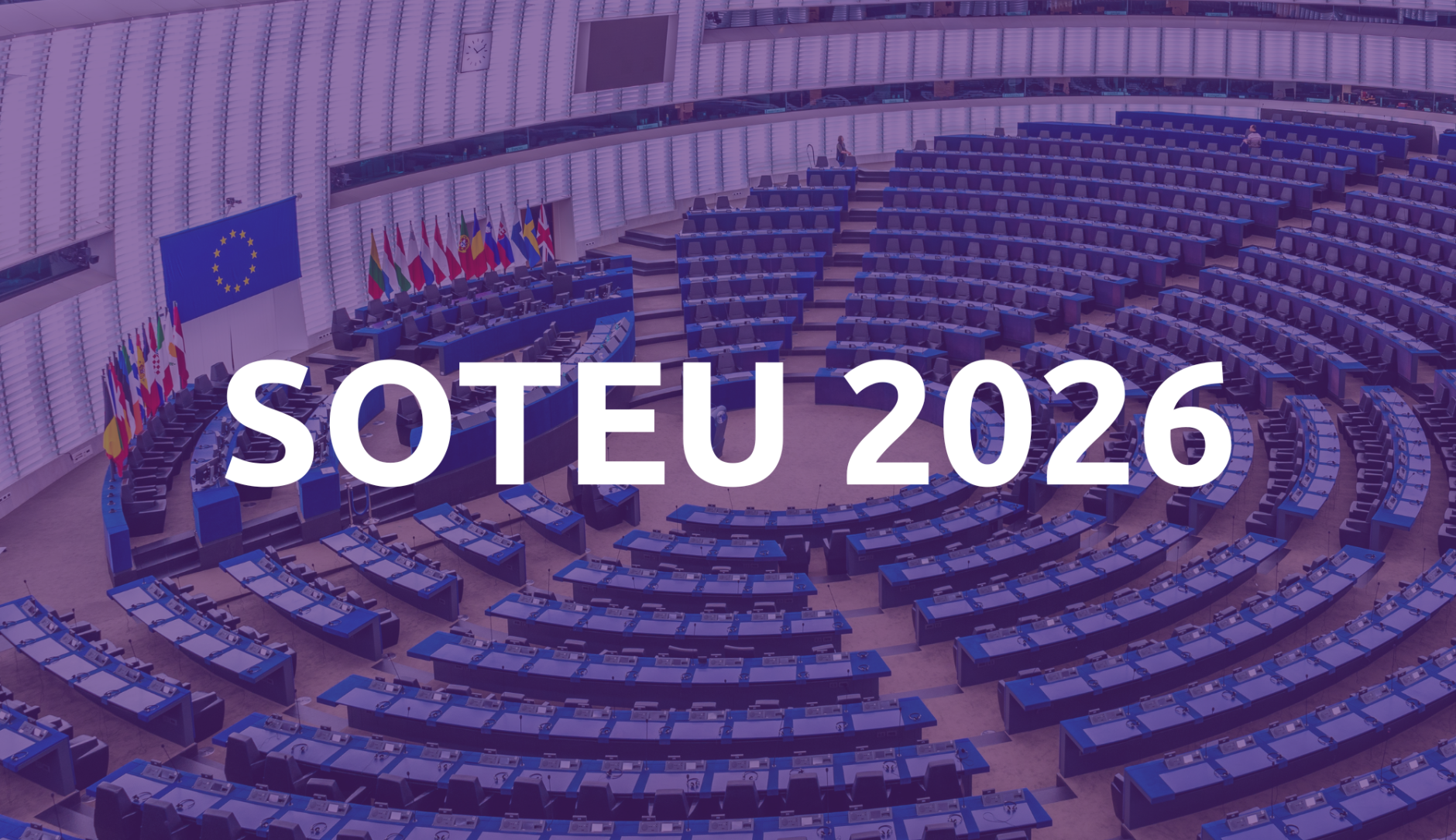
Brussels September 16, 2026 – Commission President Ursula von der Leyen is hosting her annual State of the European Union (SOTEU) with Canadian Prime Minister Mark Carney attending. With the European Union being threatened from within its borders and beyond, the SOTEU would be a moment to rally citizens behind deeper European integration to respond to these threats.
The past weeks have shown Europe’s political shortcomings. The Commission preferred to remain silent during the Iceland referendum making joining the EU a question of marginal added value and conflict over fisheries. As a result, the momentum in Norway is gone. The joint accession of Montenegro and Iceland to preempt member state vetoes is off the table. And Greenland became more exposed to the United States. This echoes Hungarian Prime Minister Péter Magyar's criticism during the recent Bled Strategic Forum, who rightfully claimed that Europe is lacking political leadership.
Sven Franck, Co-President of Volt Europa: “In this new geopolitical order, the Commission cannot pretend that just being a regulatory power is enough. We might be witnessing the end of the European Union with its legitimacy being put into question by foreign actors and nationalist governments alike. If this was the Commission's last stand, would you make it about Omnibus regulation or about political leadership? Why not rally citizens to demand that their government take the European project further? If the SOTEU is about future regulatory acts, talk to the Parliament. But if Europe’s future is on the line, President von der Leyen, who once had the ambition to lead a political Commission, should be talking to the people.”
There are attempts to break the deadlock of national governments holding the Commission back: Kaja Kallas' initiative on a “Draghi plan for Defence” however was quickly shot down by the German, French and Italian governments — the same governments who tirelessly reference the Draghi plan while dragging their feet when it comes to implementing its recommendations and providing the European Union with the necessary budget and competencies to act.
Inês Bravo Figueiredo, Co-President of Volt Europa: "Small internal differences cannot keep stopping us from working towards what we actually agreed to build together. Member states handed the Commission plenty of power, but never the mandate to lead and that is obvious when we look at Kaja Kallas' initiative for a “European defence” being rejected. Instead of building Europe's future, we spend our energy managing its internal peace. We keep choosing not to commit, and every time we do, we push back the day Europe can stand on its own on the world stage.”
Mark Carney’s visit gives the Commission a new opportunity. But instead of embracing allies coming to the European Union’s side, the Commission president considered not attending Mark Carney’s landmark speech to the European Parliament and proposal to pursue an alliance with the European Union - before making a U-turn.
Damian Boeselager, Volt Europa MEP: “There is clearly momentum, and Europe should respond to it. A remarkably large share of Canadians want their country to explore closer ties with the EU, and there is considerable openness to the idea on the European side as well. We have to stop defining Europe geographically and start defining it geostrategically. Canada is one of the countries with which Europeans have the strongest basis for a much deeper partnership. Instead of starting with all the reasons why something is impossible, we should start by asking what we can build together.”
About Volt
Volt is the first European political party active in over 30 countries and committed to work towards a united, democratic and sustainable Europe. With policies based on innovation, sustainability and social justice, Volt focuses on concrete solutions that draw on examples of European best practice and are adapted to national circumstances. Volt advocates a modern, cosmopolitan society in which the challenges of the future are tackled collectively and without ideological barriers. With numerous elected representatives at local, regional, national and European levels, Volt is one of the fastest-growing political movements in Europe and the first true European party.
For interview requests and further information, please contact:
Michael Schneider, Public Relations MEP Office
[email protected] / +49 176 76645446
Špela Majcen Marušič, Public Relations
[email protected] / +386 70 868 457
Jacob Lippold, Press Officer
[email protected]