One Fighter, Three Names, Zero Results
The FCAS failure highlights Europe's need for a single authority to overcome national interests and avoid foreign jet dependence.
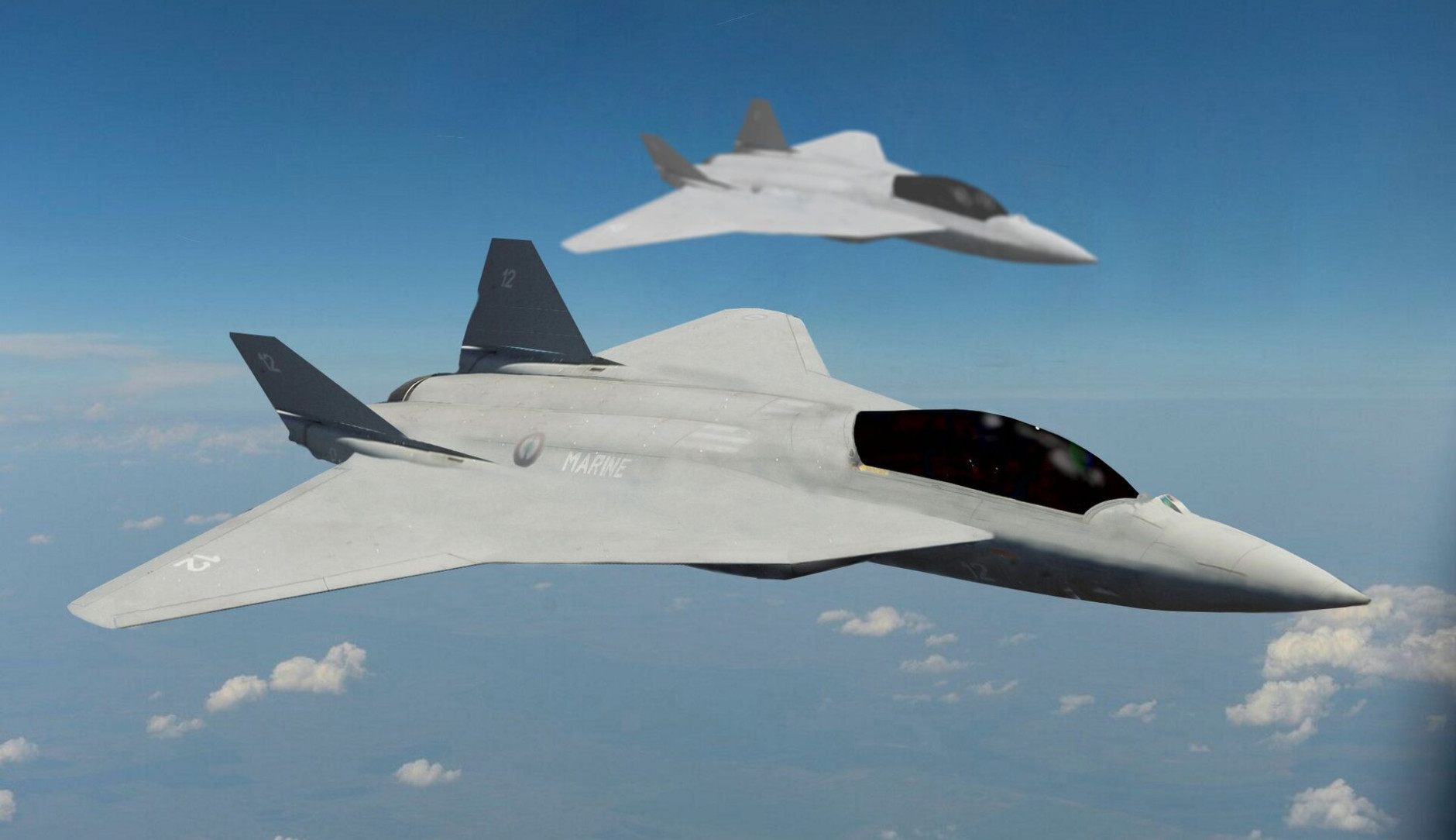
More than ever, geopolitical threats are reinforcing the observation that Europe must invest in its own defence solutions. In the past, Europe has leaned heavily on the United States for protection. . This means that innovation, jobs and decisions around capabilities have been made outside of Europe. With the US becoming less of an ally, having more diverging core values and goals, it is apparent that Europe needs to reduce its transatlantic dependency.
One very important field in this context is the development of a 6th-generation fighter, more advanced than current fighters, such as the F-35. The US, China and Russia are currently developing their own platforms.
And so had Europe been - until the recent collapse of the Franco-German-Spanish Future Combat Air System (FCAS) project, also known as Système de Combat Aérien du Futur (SCAF) and the Futuro Sistema Aéreo de Combate (FSAC). Following years of disagreement between the main contractors in the programme, Airbus and Dassault, the project has now been scrapped. The fact that there wasn’t even agreement on the naming of the programme was surely writing on the wall.
A further programme to develop a 6th-gen fighter partly in Europe, the UK-Italy-Japan-led Global Combat Air Programme (GCAP, also known as TEMPEST), remains active. However, the demise of FCAS/SCAF/FSAC is a bitter disappointment and throws into question Europe’s ability to detach itself from the US at exactly the moment it needs to build its own defence capabilities.
A Look Into the Past
Defence cooperation in Europe has a long history, as reflected by the development of the Panavia Tornado, Eurofighter, Tiger, A400M, NH90, and others. Often these joint defence procurements are plagued by cost overruns and delays which prolong the process before finally producing a compromise product. The main stumbling blocks to efficiency include national interests, capability requirements, a lack of information sharing, lengthy and complex processes and the absence of a single authority with decision-making power. Different needs and ideas lead to distrust, creating the situation where a once-shared goal for cooperation is abandoned. An inability to adequately align the interests of different countries is a significant challenge.
A better way forward for European defence cooperation
In the US, a process is used whereby the government specifies requirements, and companies bid for the contract, uniting the design bureau and the constructor in one organisation. In some cases, companies will also provide technical demonstrators. In this way, political decisions cover the selection of the design, not the final manufacturing process. Nevertheless, as we can see with the F-35, the winning consortium may seek to gain political support by distributing production throughout the country through direct subsidiaries as well as subcontractors.
The EU could set up a similar system, in which EU countries come together and decide on the requirements of a 6th gen fighter. The outcome could be that two or even three kinds of jets need to be developed. Countries would then ‘sign up’ for jet A, B, and/or C. The EU would then send out these sets of requirements. Requirement decisions should be made early on and must be fixed, in order to prevent deviations and continuous discussion. Furthermore, the agreement should be specifically on the requirements and not on the design choices. This would limit interference by countries during the design phase as a result of industrial interests. Different variations of a 6th gen fighter could provide a basis for specialisations, realising efficiency while meeting the interests of countries.
Other relevant aspects would be standardisation, interoperability and interchangeability. Standardisation should be made a significant factor in procurement and should also apply to information sharing and supply chain resilience. In this system, companies would get points for using parts that are standardised, sharing data and having a distributed supply base.
Strengthening cooperation should be supported with European initiatives (EDIP, SAFE, EDIRPA) and based on NATO standards. Such EU initiatives would speed up the process and help with the development (not production) of a 6th gen fighter.
However, trusting in the will of countries and the power of European initiatives will likely not be enough to achieve the goals envisioned. A single authority responsible for joint procurement is therefore needed to assess bids and developments independently.
Currently, Europe lags in production capacity, technology, development and affordability - the result of defence industry neglect. The short-term solution is to buy American. The long-term solution is not to buy American, but instead to accept these short-term deficiencies and face them by investing more and making a deliberate choice to accept these extra costs.
Future recommendations for Europe
Learning from what works and what doesn't, we can aim to formulate a vision for the future of European defence procurement that works for us.
Move procurement responsibility to an EU institution that is not subordinate to national interests, like OCCAR
Harmonise rules to use EU security clearances across EU borders with no national secrets concerning the joint project.
Limit political interference in the project after the initial procurement decision.
Stimulate consolidation of the European defence industry in order to limit the influence of national industrial interests.
Compromise and trust will be key in achieving international cooperation in programmes such as FCAS. A near-term, collaborative European solution that drives technological growth is far better than a distant "perfect" design or a fragmented mix of somewhat decent fighters. Swift action is needed. Only continuous improvement that can be achieved through European cooperation will strengthen strategic autonomy. If we fail to achieve this, we risk remaining dependent on countries outside of Europe and will simply never keep up.
Opinion article by members of Volt Europa’s Defence & Security Community (DefCom), Working Group for Cooperation & Integration. To join DefCom, send an email to [email protected].
______________
You and us share the same dream of a united, thriving Europe. It really means a lot to us when you make a donation, and if you would like to help us plan ahead with confidence, we thank you for your monthly contribution 💜