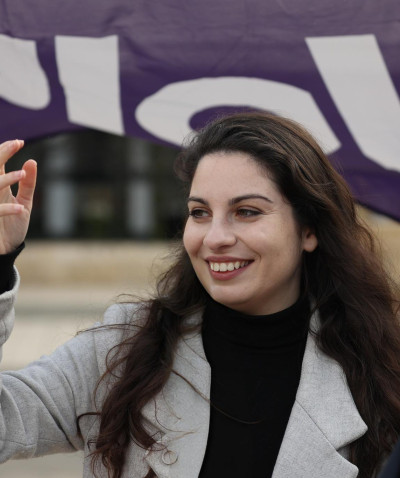
Inês Bravo Figueiredo

Follow Inês

Nationality: Portuguese 

Member Association past two years: Volt Portugal

Gender: Female

Campaign Video
Electoral Programme
Curriculum Vitae (CV)

What do you see as the most urgent democratic challenge facing Volt Europa's mission across the continent, and how would you lead the organisation's response? 

The most urgent challenge is the growing gap between citizens and political institutions as well as the European project. People feel less secure, less prosperous, and increasingly doubt that politics can deliver. This vacuum is being exploited by national actors who weaken European cooperation, even though today’s challenges of security, economy, climate, technology can only be solved at European level.

Volt’s challenge is not vision, but impact. We are often right, but not yet powerful enough to deliver at scale. My response is to lead a strategic shift in the organization where we systematically demonstrate tangible results at local, national and european level, making our impact visible and credible, rebuilding citizens' trust in institutions. Communicating clearly, with messages people understand and trust. 

We rebuild by delivering concrete results, and making Europe work visibly for citizens.

How would you handle a public disagreement with your Co-President on a matter of political strategy? 

Disagreement at leadership level is inevitable and in my perspective, a strength of the co-leadership model. Diverse perspectives, when properly harnessed, lead to better decisions.

I see disagreement as a signal to understand underlying assumptions. Different viewpoints often reflect different contexts, data, or priorities. By surfacing these, we uncover blind spots and improve the quality of our strategy. This requires disciplined debate: start from shared objectives, clarify points of alignment, and explore differences with curiosity rather than distrust.

Once a decision is made, alignment is essential. We commit publicly and execute fully. External unity is non-negotiable for credibility.

If disagreement persists on high-stakes strategic issues, I would escalate to the broader European Board to ensure legitimacy, transparency, and collective ownership of the outcome.

The Co-Presidency must model the culture we want in Volt: open in discussion and united in action. Unresolved public disagreement erodes trust; well-managed disagreement strengthens both our decisions and our credibility.

In what way will you ensure the European Board remains accountable to local volunteers and members in practice? Please give 2–3 specific mechanisms. 

In my programme I include the following mechanisms

1. Transparent Objectives & Tracking

Define clear goals and strategy roadmaps (e.g. roadmap to 23 MEPs, country targets) and publish progress updates accessible to all members. This includes what is working, what is not, and what we are changing. Transparency is necessary for accountability

2. The Volt Results Platform

Create a public platform showcasing external political impact across countries: policies influenced, campaigns run, results achieved. This allows every member to see how their work contributes to tangible outcomes and holds leadership accountable for delivering real impact.

And not included in the programme as it is quite operational, but still necessary: 3. Open sessions. 

Institutionalise all-hands/town halls with a fixed cadence. These sessions create a direct channel for questions, feedback, and challenge, ensuring leadership remains accessible and responsive, not only in moments of crisis, but as a standard practice.

Get involved

Become a member or supporter of Volt!

Join now!