Fertiliser vulnerability in the European Union
The Strait of Hormuz blockade exposes the EU's critical dependency on fertiliser imports. Volt calls on the Commission to achieve strategic autonomy by phasing out Russian imports, scaling biofertilisers, and reviving circular nutrient plans.
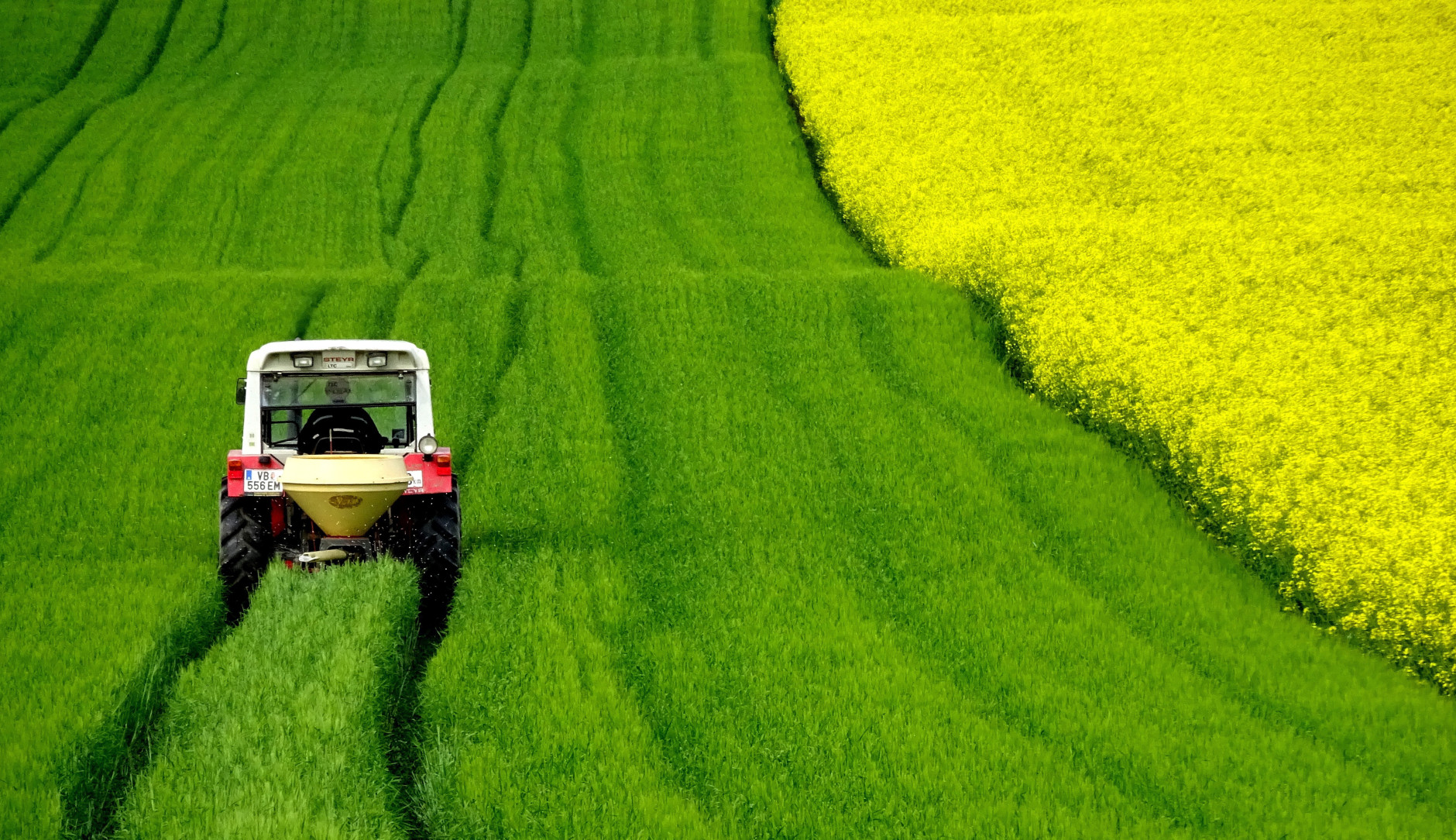
The blockade of the Strait of Hormuz has exposed a critical structural vulnerability in the European Union's agricultural supply chain. More than one quarter of globally traded fertiliser transits this single maritime chokepoint, with Gulf producers collectively accounting for roughly 16 million tonnes per year of nitrogenous, phosphates and sulfur of annual export capacity.
The current crisis demonstrates why reducing dependency on synthetic fertiliser imports is not only an environmental objective, but a matter of strategic autonomy.
Russia and Belarus together accounted for 30% of EU nitrogen fertiliser imports and 35% of EU compound fertiliser imports in 2025( fertilizers combining nitrogen, phosphorus, and potassium in a single product). In order to contribute to the economic security and strategic autonomy of the European Union, this dependence on imports must be reduced.
EU dependency
Agriculture in the EU is heavily dependent on the import of fertilisers. The main components of industrial fertiliser are nitrogen, potassium, and phosphorus.
For nitrogen, the EU relies primarily on imports from Russia, Egypt, Algeria, the US, and China.
For phosphate, the EU relies primarily on imports from Morocco, Algeria, Tunisia, Egypt, Russia, Lebanon, and Israel. Potassium fertilisers are primarily imported from Canada, the UK, Israel, and again, Russia.
While direct imports from the Gulf region to the EU are limited, the Hormuz blockade has driven up world market prices significantly, exposing the EU to geopolitical instability it has no direct leverage over.
Existing policy
The urgency of fertiliser supply security is not new. Following Russia's invasion of Ukraine in 2022, the European Fertiliser Strategy had already identified import dependency and price volatility as structural risks to European agriculture. At the same time, the European Green Deal proposed an Integrated Nutrient Management Action Plan (INMAP), which aimed at a 20% reduction in fertiliser use through improved nutrient efficiency and circular approaches, a measure that would have directly reduced import dependency while supporting sustainability goals.
However, the European Commission seems to have deprioritised INMAP without a clear alternative, leaving a policy gap at precisely the moment when nutrient efficiency and supply resilience are most needed.
The European Commission presented the Fertiliser Action Plan on 19 May 2026. Although various short-term measures are presented and several long-term options are proposed that require further elaboration, there is a lack of a clear vision in which strategic choices are being made.
Call for action
This is the moment to reduce European dependence on artificial fertilisers while simultaneously strengthening the competitiveness of the agricultural sector and promoting more sustainable production.
Volt calls on the Commission to use the Fertiliser Action Plan to:
Support competitiveness through innovation, not deregulation. Strong regulation with clear goals drives innovation and reduces dependencies. Reducing input costs for European farmers must be achieved through ambitious, goal-oriented regulation that incentivises investment in technologies reducing dependency on synthetic fertilisers. Clear regulatory targets are not a burden on competitiveness, they are the primary driver of the innovation needed to overcome structural dependencies and protect the long-term viability of European agriculture.
Phase out dependency on Russian fertiliser imports. The EU's tariff measures since July 2025 are a first step, but an insufficient one. The Commission should set a clear timeline for eliminating Russian and Belarusian fertiliser imports, paired with concrete support for alternative supply chains.
Choose circularity and revive and strengthen the Integrated Nutrient Management Action Plan. Improved nutrient efficiency and circular nutrient flows are simultaneously an environmental and a strategic objective. INMAP should be integrated into the Fertiliser Action Plan as a binding framework.
Facilitate the scale-up of biofertilisers. The regulatory framework should be tailored to enhance the market uptake of biofertilisers, and public investment in research, demonstration projects and knowledge sharing should be increased.
Monitor fertiliser reserves. Improve transparency and monitoring of fertiliser stocks and address structural market failures. While existing stocks in Europe may currently be sufficient to cover short-term needs, the current crisis has highlighted the lack of accurate, real-time visibility over fertiliser supplies across Member States. The Commission should therefore establish a robust monitoring framework for key fertiliser inputs, particularly urea and ammonia, to ensure early warning capacity ahead of critical planting windows. Beyond monitoring, the Commission should develop targeted instruments to tackle market failures that leave farmers exposed to price volatility and supply disruptions during geopolitical shocks.
Opinion article by members of the Agriculture & Food Security Community (AgriCom).
______________
You and us share the same dream of a united, thriving Europe. It really means a lot to us when you make a donation, and if you would like to help us plan ahead with confidence, we thank you for your monthly contribution 💜